Marina Budanova

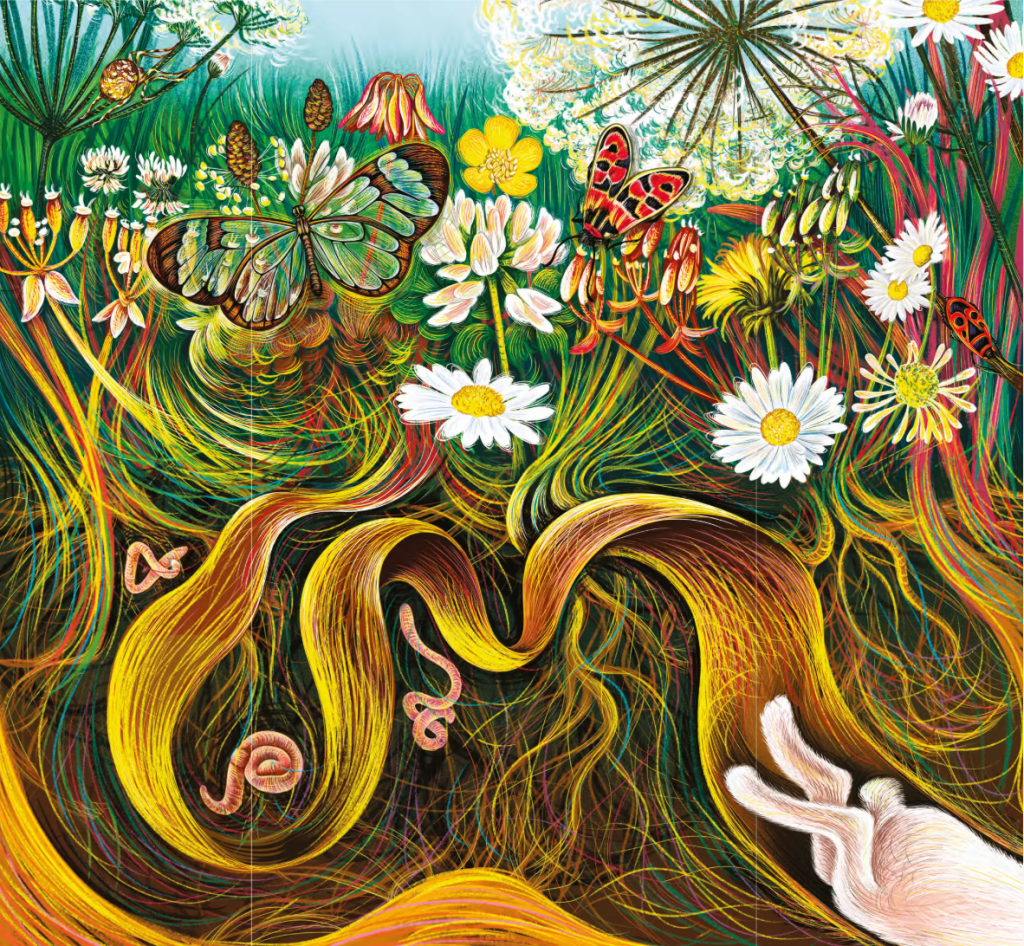
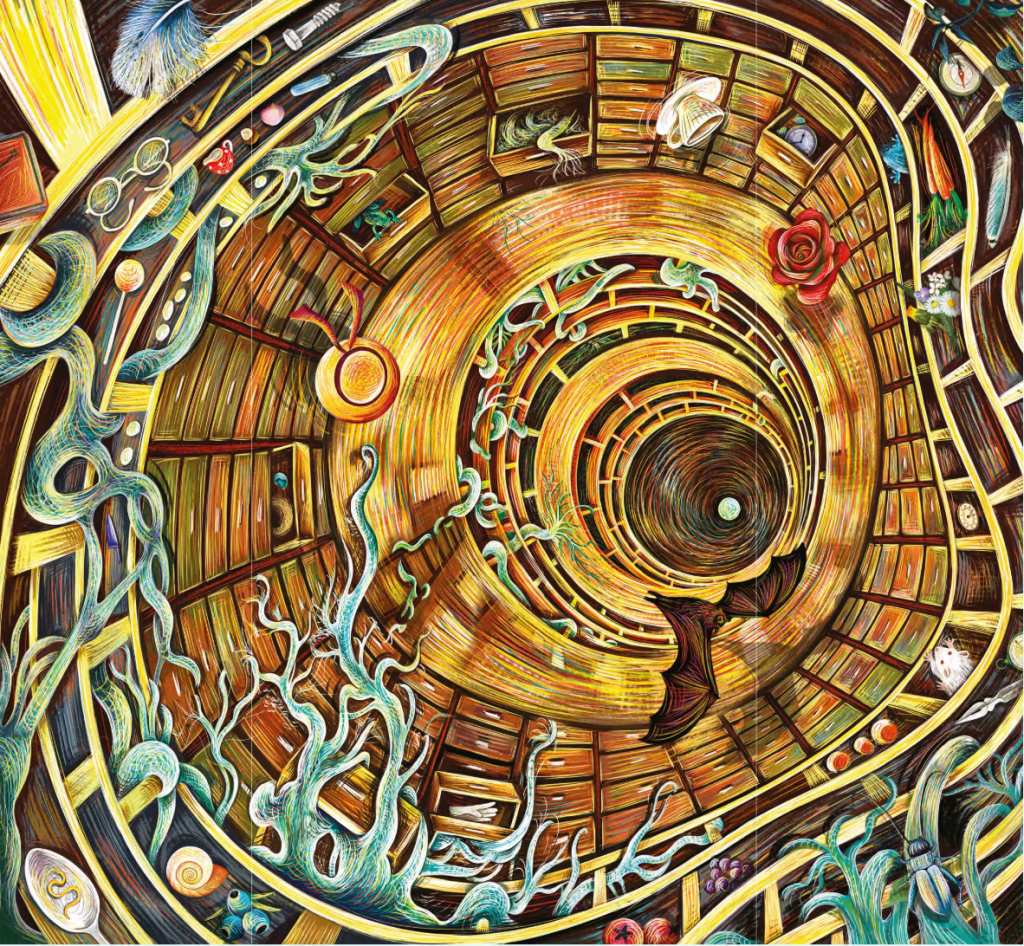
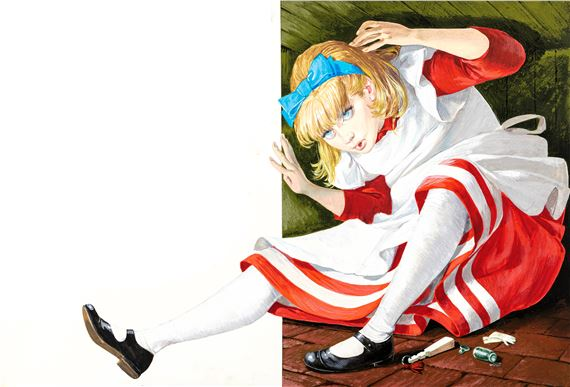
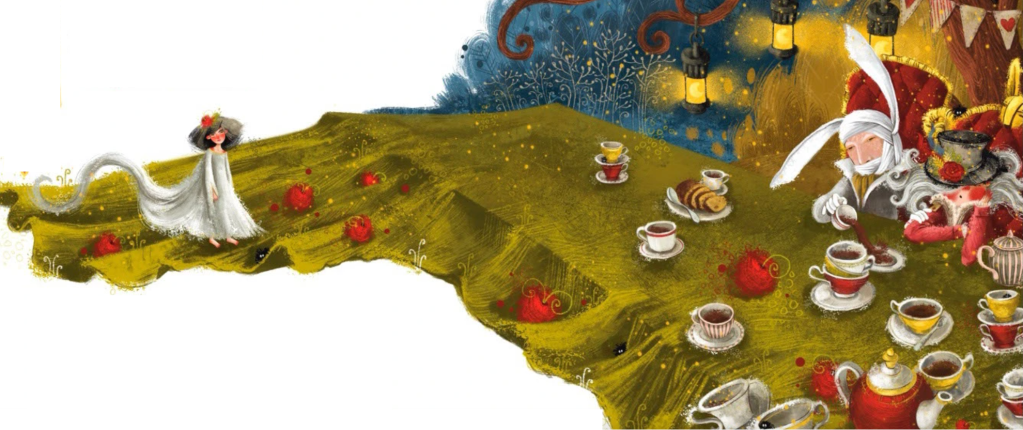
Among the most striking recent interpretations of Alice’s Adventures in Wonderland are those created by the Russian illustrator Marina Budanova, whose vibrant and imaginative artwork brings a fresh visual energy to Lewis Carroll’s classic tale. Budanova, a children’s book illustrator and visual storyteller, has developed a distinctive style characterized by bold colour palettes, decorative detail, and vivid compositions.

Published in 2024 by Metamorphoses, and consider one of the best illustrations of the year, Budanova’s Alice immediately caught the attention of collectors and Alice enthusiasts. Her Wonderland is not a Victorian fantasy filtered through nostalgia, but a dazzling contemporary dreamscape. Rich crimson roses, fantastical creatures, swirling patterns, and expressive characters fill each page, creating illustrations that feel both theatrical and deeply personal.

What makes Budanova’s work especially appealing is her willingness to reinvent familiar scenes. Rather than echoing Tenniel’s iconic imagery, she constructs an entirely new visual language for Wonderland. Alice appears thoughtful and self-possessed, moving through a world that is simultaneously enchanting and slightly unsettling, capturing the peculiar balance of wonder and ambiguity that lies at the heart of Carroll’s text.

The Lewis Carroll Society of North America highlighted Budanova’s edition in its 2025 survey of outstanding modern Alice illustrators, praising her “wildly colorful and truly imaginative paintings.” Such recognition places her among a growing generation of artists demonstrating that Wonderland remains an inexhaustible source of visual inspiration.

For collectors of Alice illustration, Marina Budanova’s edition offers a fascinating example of how contemporary artists continue to reinterpret Carroll’s masterpiece.

Gennady Kalinovsky

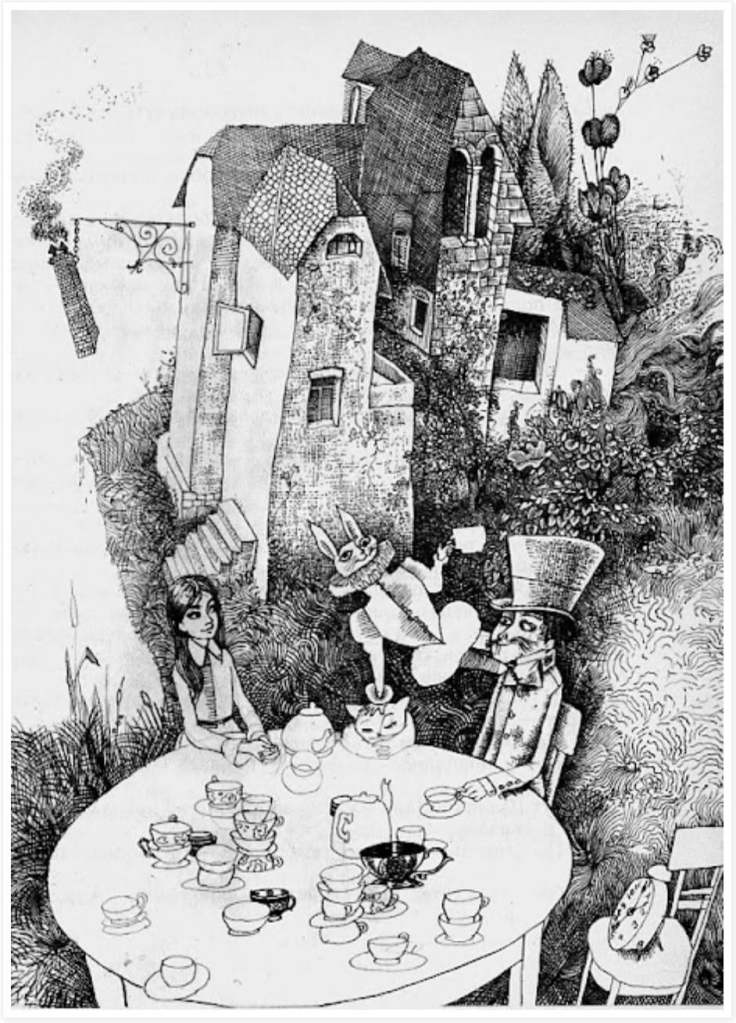
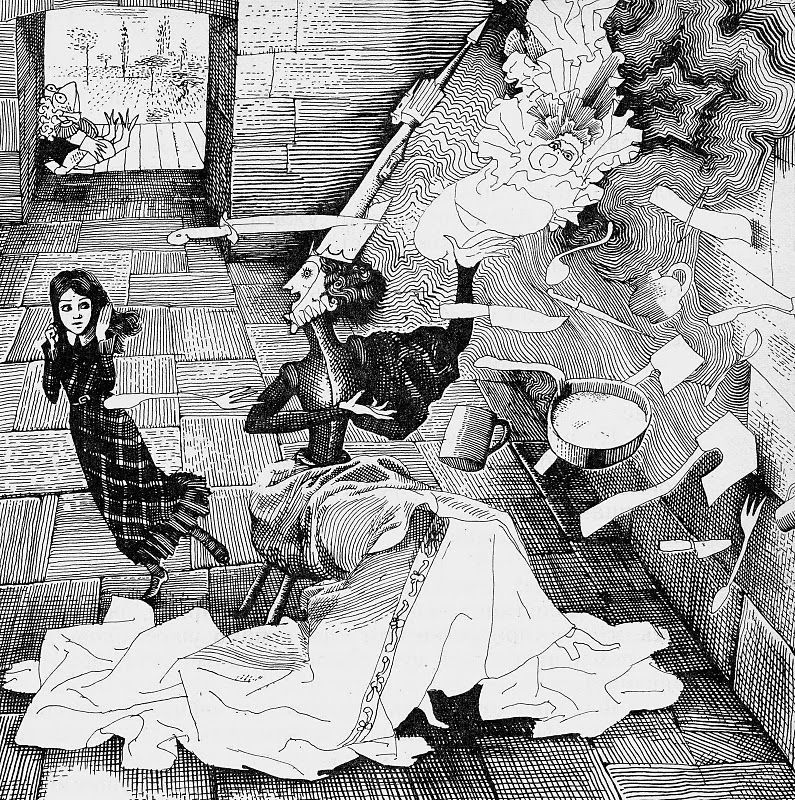
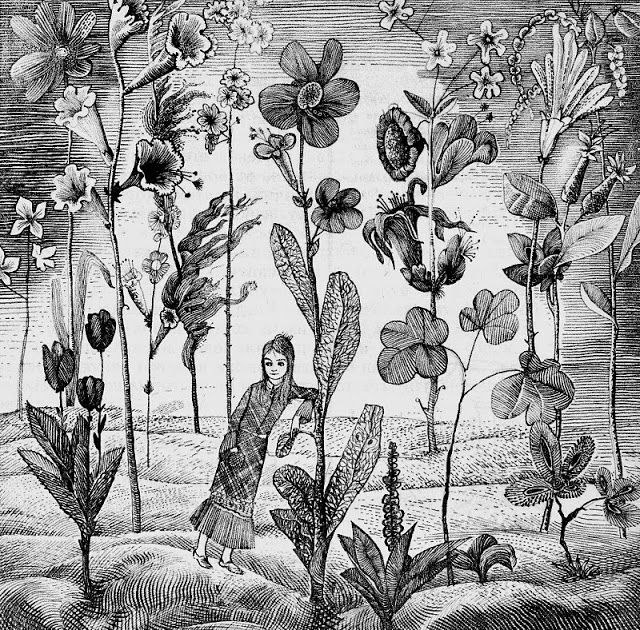
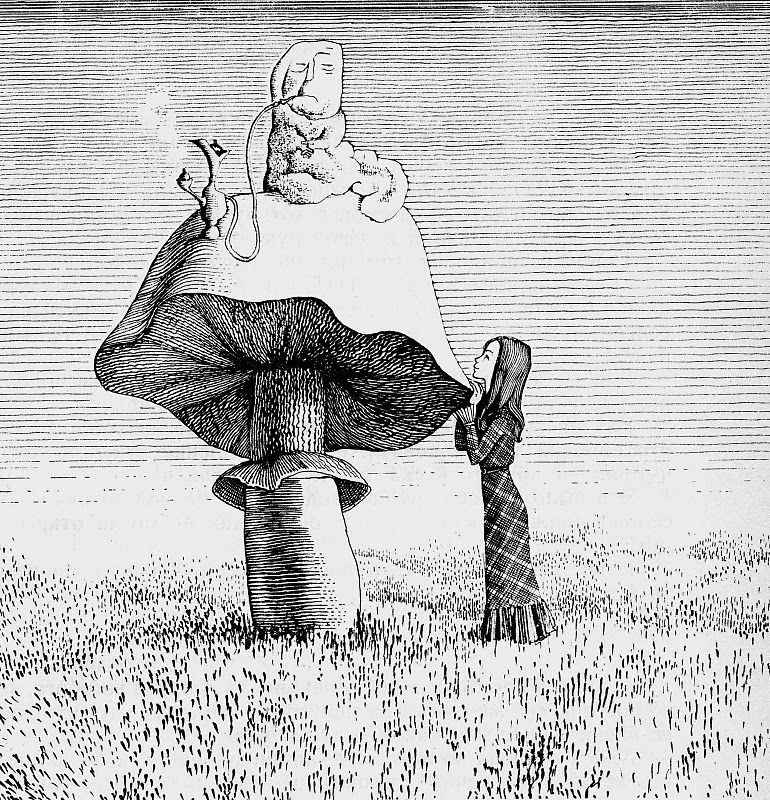
Gennady Vladimirovich Kalinovsky was one of Russia’s most renowned illustrators. In 1943, while still a young artist, he submitted his drawing The Fall of the Nibelungs to a newspaper competition, won first prize, and received a recommendation for admission to the Moscow Secondary Art School. He later enrolled at the Surikov Art Institute, where he studied from 1949 to 1955.

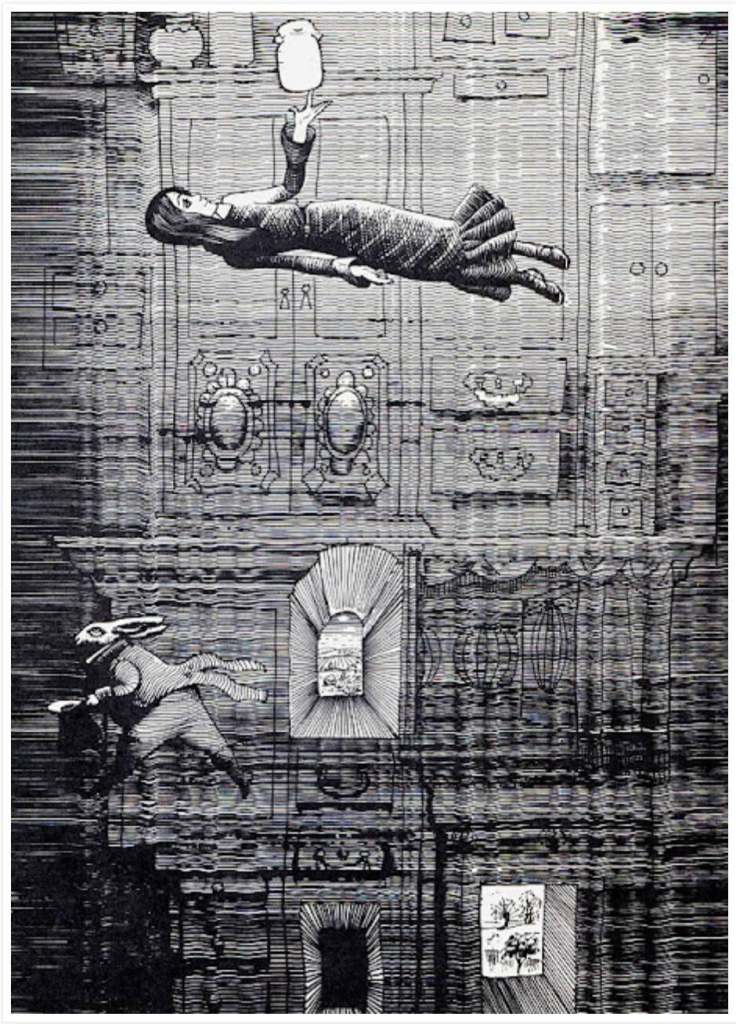
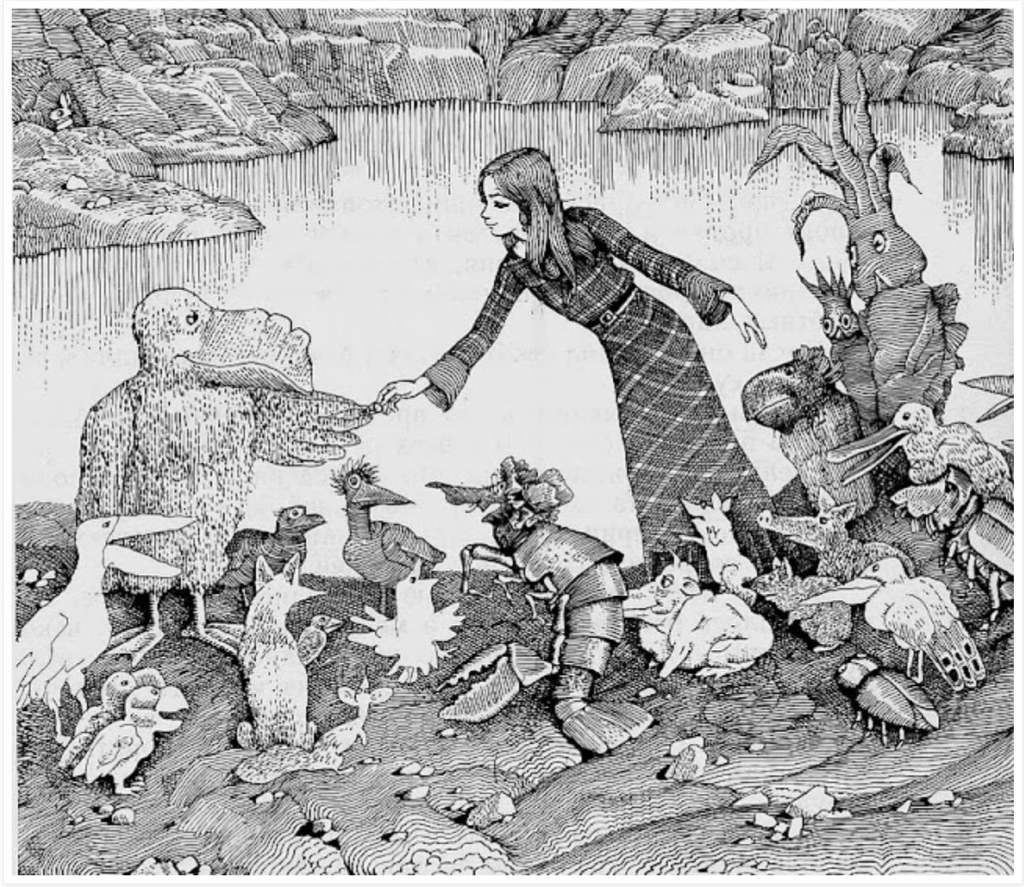
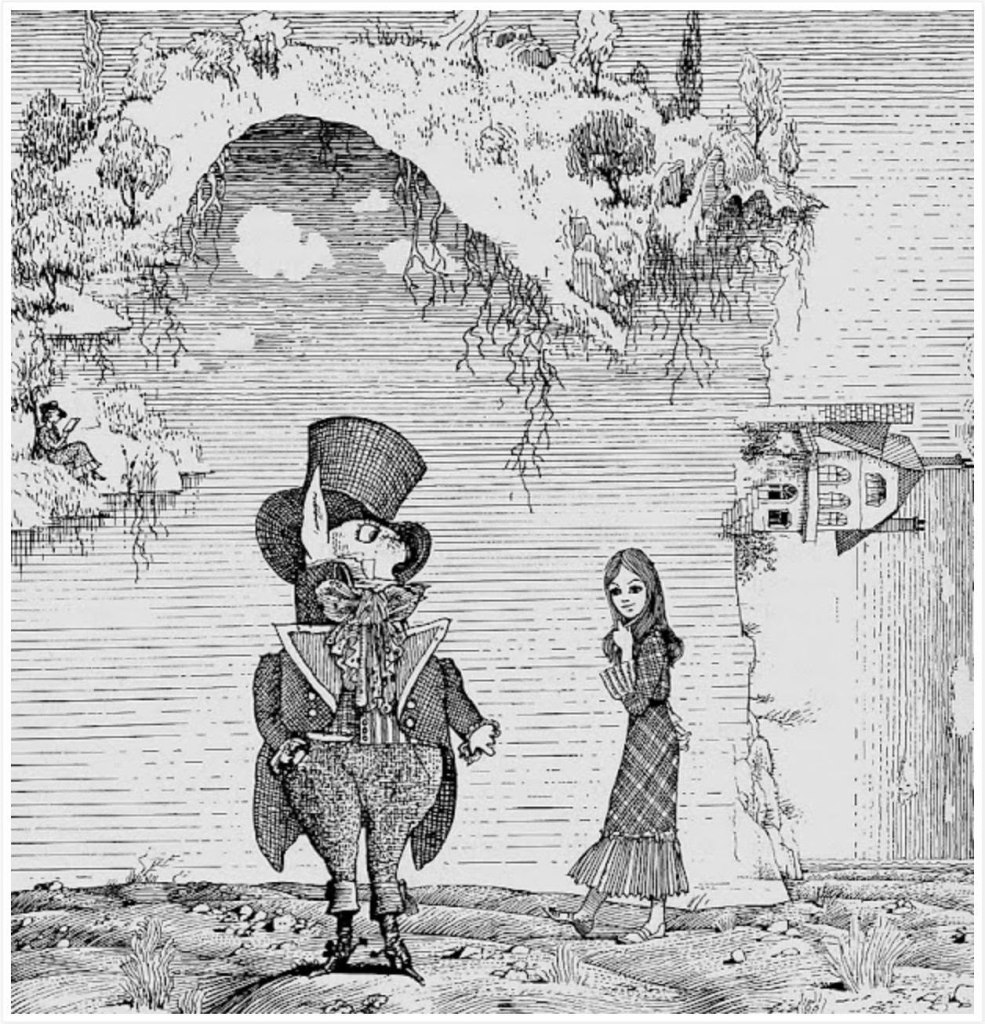
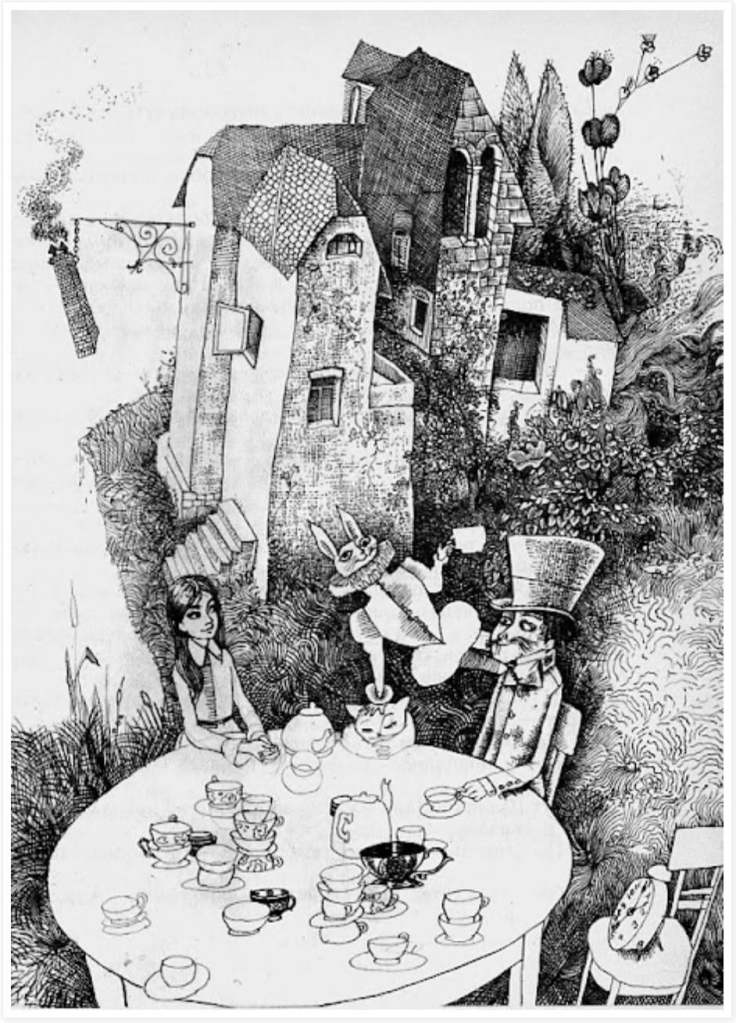
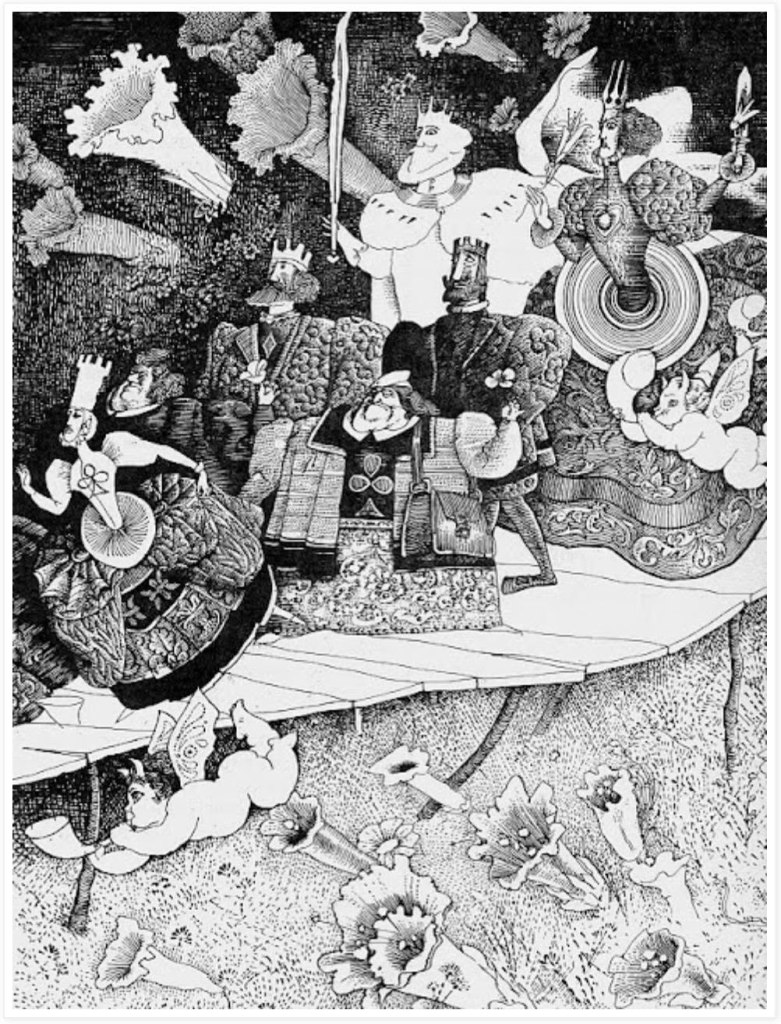
Kalinovsky’s body of work, which includes illustrations for more than ninety books, is distinguished by its delicate pen-and-ink line work and richly detailed compositions. His imagery blends fantasy and surrealism, creating dreamlike scenes infused with an often subtle Gothic atmosphere.

One of Kalinovsky’s greatest artistic passions was Lewis Carroll’s Alice books, although political constraints prevented him from and publishing them until he was nearly sixty years old. He achieved widespread acclaim with his masterful black-and-white illustrations for Alice’s Adventures in Wonderland in Boris Zakhoder’s celebrated adaptation (1974, Detskaya Literatura). He subsequently illustrated several other works by Carroll. Particularly noteworthy are his illustrations for Through the Looking-Glass, for which he received the Ivan Fyodorov Prize and Diploma in 1980 and 1982. In 1988, he produced a colour edition of Alice in Wonderland. More recently, Artist’s Choice Editions has published editions of both Kalinovsky’s Alice books, combining the original black-and-white illustrations with his later colour artwork.

Many Russian collectors regard Kalinovsky’s Alice in Wonderland illustrations as among the finest interpretations of Carroll’s work ever published in Russian.

Milo Winter

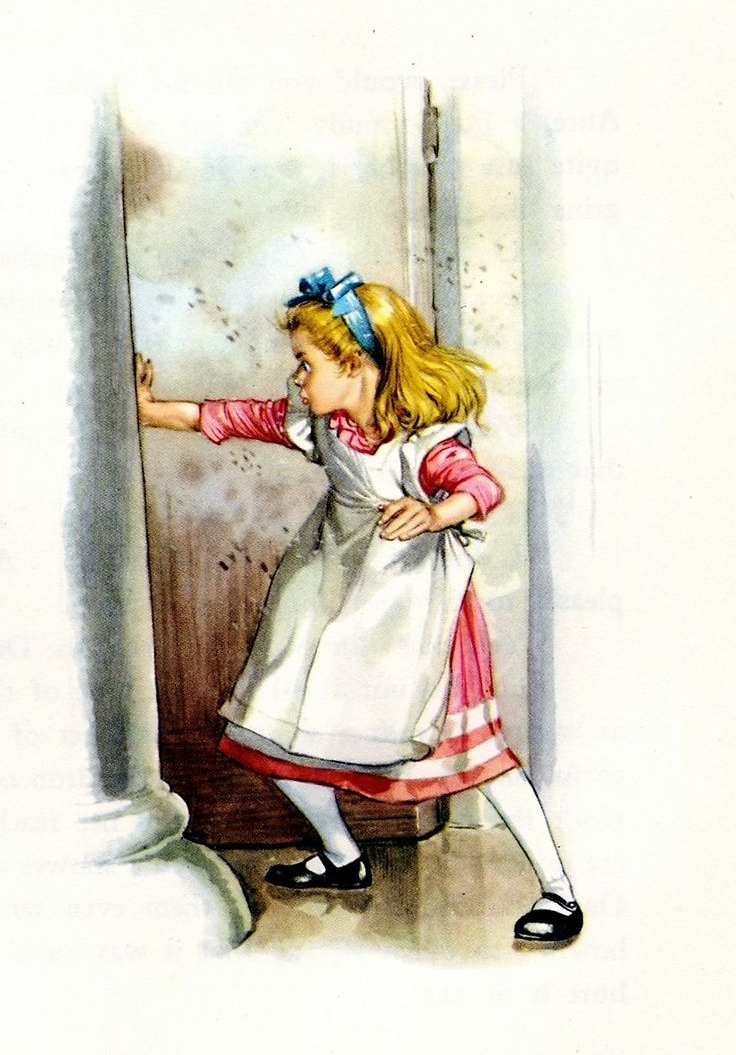
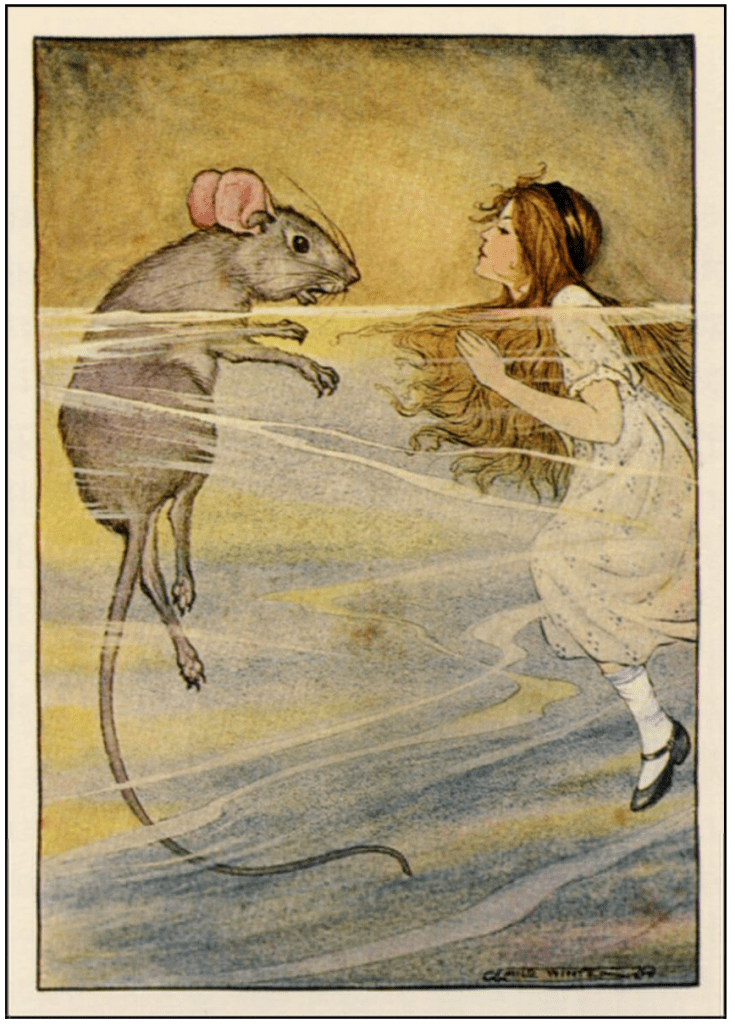
Milo Winter (1888–1956) was a celebrated American illustrator of the Golden Age of Illustration, a period spanning the late 19th and early 20th centuries. Born in Princeton, Illinois, Winter studied at the School of the Art Institute of Chicago and began his career with Billy Popgun in 1912. Milo Winter illustrated numerous classics, including Gulliver’s TravelsArabian NightsAesop’s Fables, and Alice’s Adventures in Wonderland, first published in 1916 by Rand McNally & Company

Winter’s Alice is a departure from the earlier versions. She appears older, more reflective, and elegantly composed, often adorned with a stylish ribbon and soft, elongated features. His style blends Art Nouveau grace with narrative clarity, making Wonderland feel both magical and grounded.

Winter’s illustrations are known for their masterful accuracy, humorous touches, and emotional depth. His work remains a favorite among collectors and readers, offering a timeless interpretation of Alice.

Sandra Sofia Santos

Sandra Sofia Santos is part of a group of Portuguese artists selected by Livraria Lello to reinterpret literary classics for children. Her work on Alice stands out for its bold character design, expressive use of color, and a clear departure from the more delicate or surreal styles. Her Alice is a girl of action—curious, critical and full of life
The Livraria Lello’s The Little Collection Alice brings a fresh and empowering vision to Alice’s Adventures in Wonderland. Her Alice is not the fragile, wide-eyed girl of tradition, but a robust and spirited child, full of curiosity, wonder, and critical thinking. Santos’s illustrations reimagine Alice as a feminine strong figure, capable of navigating Wonderland with confidence and grace.

The book, adapted by Adélia Carvalho for younger readers, is designed for children aged 6 to 10 and features full-page illustrations with minimal text, making it ideal for read-aloud sessions or independent exploration.

This edition is available in Portuguese, English, Spanish, and French.

K. M. Roberts

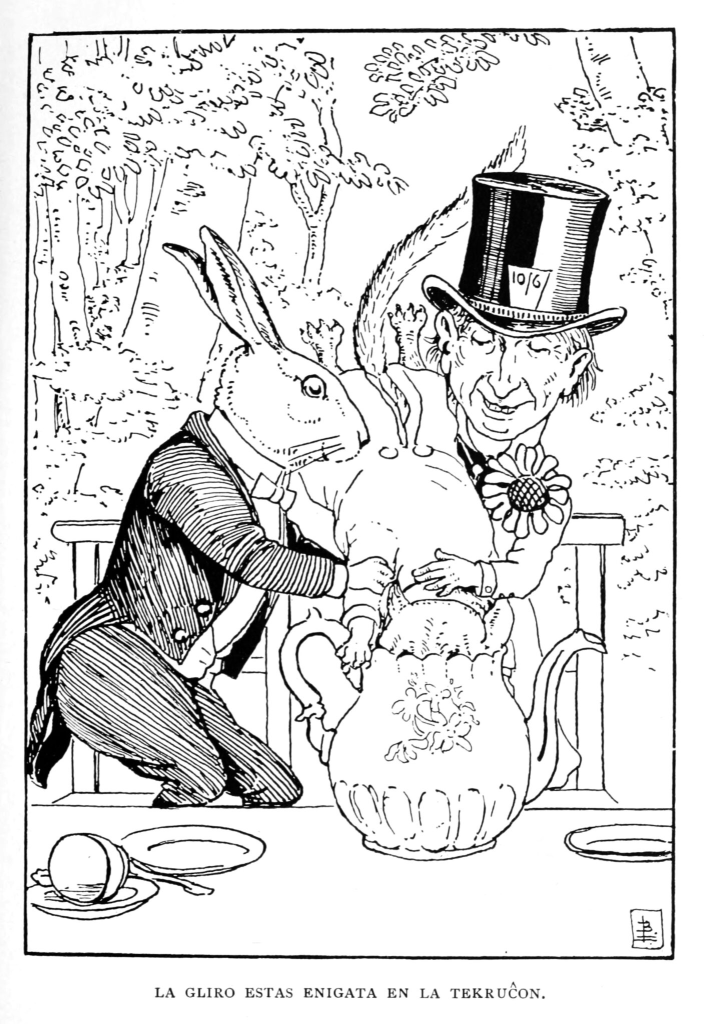
K. M. Roberts’s 1908 edition of Alice’s Adventures in Wonderland offers a graceful and imaginative reinterpretation of Lewis Carroll’s classic, departing from the iconic Victorian literalism of John Tenniel. Roberts’s illustrations, eight black-and-white drawings, are infused with the decorative stylization of the Art Nouveau movement, bringing a fresh visual language to Wonderland.

Her pen-and-ink work is both humorous and elegant, capturing the surreal charm of Carroll’s world with flowing lines and expressive characters. Scenes like the Mad Tea Party and the Queen’s Croquet Ground are rendered with a lightness that feels both timeless and distinctly early 20th century. The original 1908 edition, published by S. W. Partridge & Co., is notable not only for its illustrations but also for its richly decorated red cloth binding.

This edition, now reprinted by Pook Press, allows modern readers to rediscover Roberts’s unique vision—a Wonderland that is not just curious, but beautifully strange.

Julia Sarda

Júlia Sardà Portabella is an illustrator from Barcelona. She completed her studies in illustration in 2010 at Joso, the University of Fine Arts and Massana School in Barcelona. Her work, focused in editorial illustration, is recognized for her captivating and whimsical illustrations. She can be appreciated in several great books like The Wonderful Wizard of OzAlice in Wonderland and Charlie and the Chocolate Factory, or her first illustrated book La reina en la cueva.

Sarda’s vibrant colors illustrations, intricate details and enchanting dreamlike quality, hold the necessary elements to depict the fantastical world of Lewis Carroll’s. One can find a published Alice from Julia Sarda (2015, edited by Two Hoots), but also a sketched one. Interestingly, the first is inspired by Alice Lidell, the later depicts a classic blond Alice.

Rodney Matthews

Rodney Matthews is a renowned British illustrator known for his intricate detail, vivid colors, and fantastical imagery. Matthews is best known for his illustrations in the realms of fantasy, science fiction, and music, particularly album covers and book illustrations. His artwork often features imaginative landscapes, fantastical creatures, and intricate details that transport viewers to otherworldly realms. These are the perfect ingredients to illustrate “Alice in Wonderland”.

Matthews gained prominence in the 1970s and 1980s for his album cover artwork for numerous bands, particularly in the progressive rock genre. Matthews has also illustrated numerous books, ranging from fantasy and science fiction to children’s literature. Some of his most famous book illustrations include editions of “The Hobbit” and “The Lord of the Rings” by J.R.R. Tolkien, as well as his own original works such as “The Complete Spellbound Book” and “The Art of Rodney Matthews.”

His “Alice in the Wonderland” was edited in 2008 by Templar.

A.L. Bowley and Father Tuck’s

Father Tuck’s Panorama was a British publishing house known for its illustrated children’s books, postcards, and greeting cards. The company, Raphael Tuck & Sons, operated from the 19th to the mid-20th century. Starting in 1905, Father Tuck’s published a series of playable Alice versions illustrated by Ada Leonora Bowley. You can find a version of Alice with movable pictures, a “come to life Alice” (pop up style), a whole book with many B&W illustrations and one colour plate ( printed circa 1930), or a later one published for the ” THE GOLDEN TREASURY LIBRARY ” collection with many more colour plates.

From 1910 there is also a red pictorial paper over boards, with 8 accordion pleated panels and 14 color illustrations. The original copies have prohibitive prices , but there is a new edition Published by B Shackman & Co in 2000 that offers an affordable version.

Ada Leonora Bowley was recognized by her work for the Raphael Tuck publishing house, which very often was not credited to her (has in the case of the early Father Tuck’s Alice editions) . She attended the Blackheath School of Art and was one of the ‘Golden Age illustrators’ (1880s to the 1930s), who together with her sister Sophia May Bowley, illustrated amazing versions of all the nursery tales you may remember.

Lewis Carroll

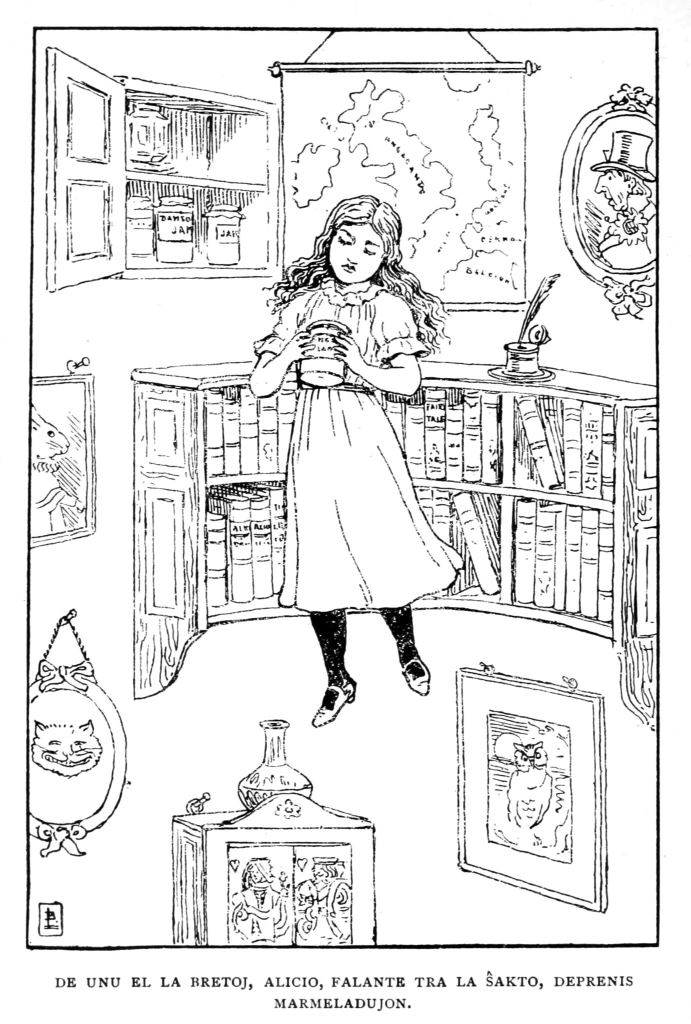
Carroll the renowned English author of “Alice’s Adventures in Wonderland”, whose real name was Charles Lutwidge Dodgson, was in fact the first illustrator of Alice. Though is talent for drawing does not match his writing genius, his illustrations for “Alice Under Ground” added an enchanting visual dimension to the story. His intricate drawings complements the story’s fantastical nature. Although not as widely recognized as the illustrations by Tenniel, Carroll’s artwork offers a fascinating glimpse into the mind of the author and his imaginative interpretation of Wonderland.

One interesting aspect of Carroll’s illustrations is his depiction of Alice herself. Through his drawings, Carroll brings to life the character he envisioned. His illustrations often portray Alice with flowing hair, a determined expression, and a sense of wonder in her eyes. Carroll’s portrayal of Alice adds depth to the story.

At the end of his manuscript Carroll draws a portrait of Alice Liddell. If he intend his character to look like Alice herself, it is not that easy to tell. However, many other later Alice’s illustrators certainly did.

You can read more about the first Alice (1864) here: https://publicdomainreview.org/collection/carroll-illustrations-for-alice-undergound

Alice Ross

Alice Ross was a fine illustrator, who apparently worked mostly W.P. Nimmo. Unfortunately, not much information on the work of Alice Ross is available.

Her beautiful victorian Alice was out in 1907 when the original copyright ended.

Published by W.P. Nimmo, Hay & Mitchell (1907, Edinburgh)